
What Is a Wireless Fingerprint Reader?
A wireless fingerprint reader is a biometric device that captures and analyzes fingerprint patterns to verify an individual’s identity. Unlike wired systems, these readers communicate with security systems, HR platforms, or time attendance software using Wi-Fi or Bluetooth. This eliminates the need for complex wiring, making installation faster, more flexible, and suitable for both permanent and temporary setups.
Wireless fingerprint readers are designed for multiple environments—offices, factories, healthcare facilities, schools, and outdoor mobile operations. Many models are portable, feature long-lasting batteries, and support multi-modal authentication methods to enhance security further.
Key Benefits of Using a Wireless Fingerprint Reader
1. Superior Security and Fraud Prevention
Fingerprint patterns are unique to each person, making them nearly impossible to duplicate or forge. A wireless fingerprint reader ensures that only authorized personnel gain access to restricted areas or systems. Compared to traditional security methods, fingerprints cannot be lost, stolen, or forgotten, significantly reducing the risk of unauthorized entry.
Some advanced devices also incorporate detección de actividad, which prevents fake fingerprints or cloned patterns from being used, further enhancing security in high-risk environments.
2. Improved Operational Efficiency
Time is money, and a wireless fingerprint reader streamlines workflows. Employees or users can quickly scan their fingerprints for instant access, eliminating delays caused by manual verification, key distribution, or password resets.
For HR and attendance management, these readers automatically log entries and exits, integrating seamlessly with software like HFIMS to generate real-time attendance reports, track overtime, and reduce administrative workload. This automation saves organizations valuable time and increases overall productivity.
3. Flexibility and Easy Installation
Wireless fingerprint readers remove the constraints of cables and network wiring. Installation can be done in minutes, whether for a new office, a temporary site, or a mobile operation. Portable models with rechargeable batteries can be moved between locations, making them ideal for:
- Construction sites
- Temporary exhibitions
- Field enrollment and verification
- Remote facilities without stable power or network access
The ability to deploy a secure biometric system in virtually any environment enhances both operational flexibility and security coverage.
4. Multi-Modal Authentication and Integration
Modern wireless fingerprint readers often support multi-factor authentication by combining:
- Reconocimiento de huellas dactilares
- PIN codes or passwords
- RFID or NFC cards
- Reconocimiento facial
This layered security approach ensures that even if one factor is compromised, unauthorized access remains nearly impossible.
Moreover, most readers can integrate with:
- Sistemas de control de acceso
- Time and attendance software
- HR management platforms
- Visitor management systems
Integration allows for centralized control, real-time monitoring, and remote management, making it easier to assign, update, or revoke access permissions instantly.
5. Cost-Effective and Scalable
Though initial investments in wireless fingerprint readers may seem higher than traditional keycards or PIN systems, they often save money in the long run. There’s no need to replace lost cards, update passwords, or deal with breaches caused by shared credentials.
Wireless fingerprint readers are also scalable. Organizations can start with a small number of devices and expand as needed, connecting multiple readers to a central management system without major infrastructure changes.
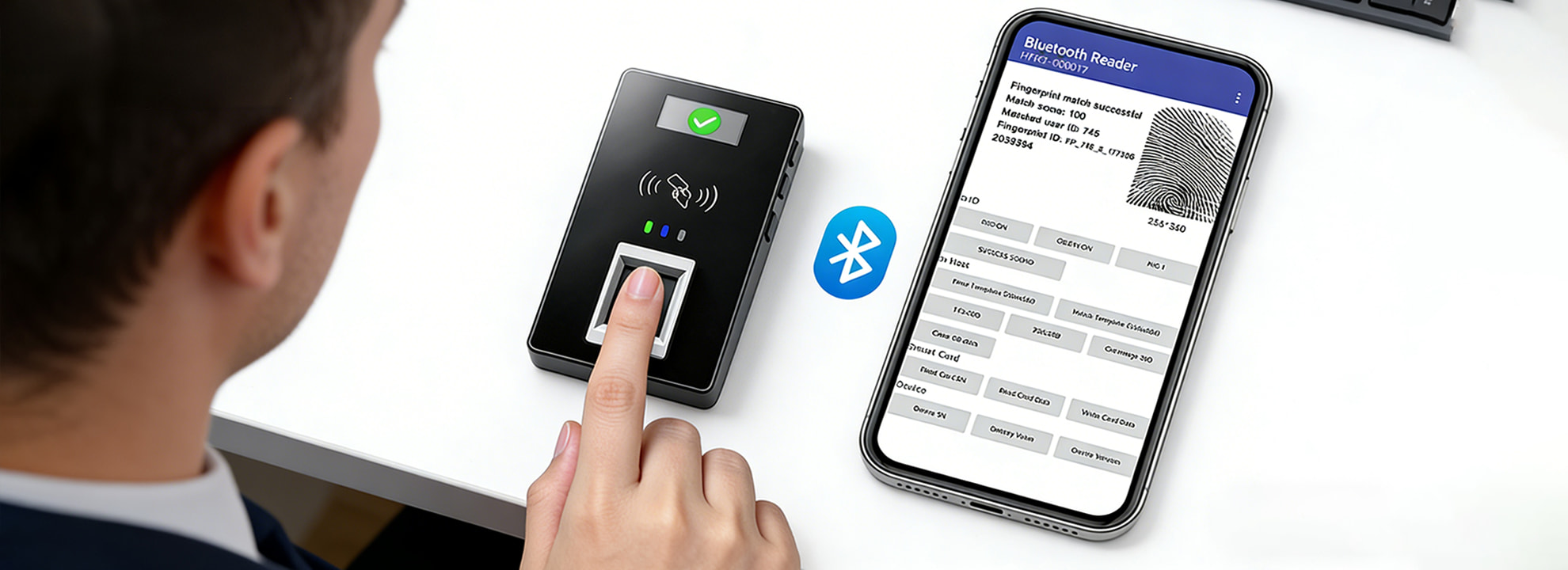
Applications of Wireless Fingerprint Readers
. Corporate Offices:
Secure entry points, track employee attendance, and manage access to sensitive departments or executive areas.
. Healthcare Facilities:
Protect patient records, pharmaceuticals, and restricted zones with precise biometric authentication.
. Industrial Sites:
Control access to machinery, warehouses, and high-risk areas, ensuring only trained and authorized personnel enter.
. Financial Institutions:
Safeguard vaults, data centers, and secure rooms with multi-factor biometric authentication.
. Government and Law Enforcement:
Maintain controlled access to sensitive offices, evidence rooms, and enrollment systems with portable readers for fieldwork.
. Education and Research Institutes:
Protect laboratories, exam centers, and student records from unauthorized access.


Features to Consider When Choosing a Wireless Fingerprint Reader
- Recognition Accuracy:
Look for devices with low false rejection and false acceptance rates. - Speed of Authentication:
Fast recognition ensures smooth access without delays. - Duración de la batería:
Especially for portable devices, long-lasting batteries reduce downtime. - Durabilidad:
Waterproof, dustproof, and shockproof designs are essential for industrial or outdoor environments. - Compatibilidad:
Ensure the reader works seamlessly with existing software and network infrastructure. - Security Protocols:
Support for encrypted communication and anti-tamper features is critical.
Choosing the Right Wireless Fingerprint Reader
When selecting a wireless fingerprint reader, consider the following factors:
- Recognition Speed: Fast verification reduces queues and improves workflow efficiency.
- Accuracy and Security: Look for devices with high false rejection and acceptance rates.
- Battery Life: Long-lasting battery ensures uninterrupted operation, especially for portable units.
- Compatibility: Ensure the reader works with your existing access control or HR management systems.
- Durability: Waterproof and shockproof designs are ideal for industrial or outdoor environments.
Conclusión
A wireless fingerprint reader is more than just a security device; it is a comprehensive solution that enhances both security and operational efficiency. By combining biometric precision, portability, and seamless integration with modern systems, these readers provide organizations with a reliable, convenient, and future-proof way to manage access and protect sensitive information.
Investing in a wireless fingerprint reader not only safeguards your premises but also streamlines workflows, reduces administrative burden, and ensures peace of mind for both management and employees.
