
Biometric authentication technologies continue to evolve as organizations demand higher security and greater reliability. Among the most advanced solutions available today is the palm vein scanner, a biometric device that identifies individuals using the unique vein patterns inside the palm.
However, one critical question remains for decision-makers and system integrators: How accurate is a palm vein scanner?
In this article, we provide a detailed and professional analysis of palm vein scanner accuracy, including performance metrics, influencing factors, comparison with other biometric technologies, and real-world applications.
What Is a Palm Vein Scanner?
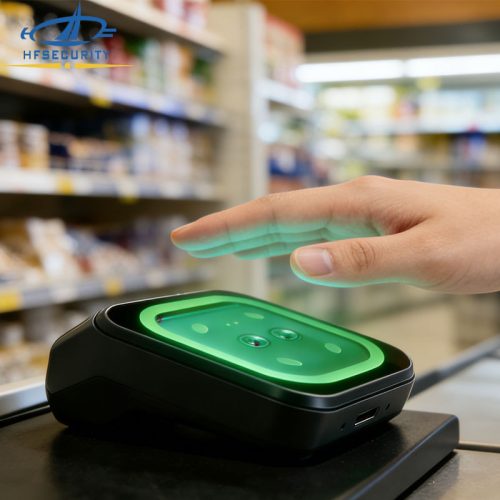
UN palm vein scanner is a biometric device that uses near-infrared light to capture the vein pattern inside a person’s palm. Hemoglobin in the blood absorbs infrared light, allowing the scanner to map a highly detailed vascular pattern.
Because vein patterns are:
Internal and invisible to the naked eye
Unique to each individual
Extremely difficult to replicate
Palm vein recognition is considered one of the most secure and accurate biometric identification methods available today.
Key Accuracy Metrics of a Palm Vein Scanner
When evaluating how accurate a palm vein scanner is, we must consider several technical metrics used in biometric authentication systems.
1. False Acceptance Rate (FAR)
The False Acceptance Rate (FAR) measures how often the system incorrectly grants access to an unauthorized person.
High-quality palm vein scanners typically achieve:
FAR as low as 0.0001% or lower
This extremely low FAR makes palm vein scanners suitable for high-security environments such as banking institutions, government facilities, and data centers.
2. False Rejection Rate (FRR)
The False Rejection Rate (FRR) measures how often the system incorrectly denies access to an authorized user.
Modern palm vein scanner devices usually maintain:
Very low FRR under normal operating conditions
Low FRR ensures a smooth user experience without frequent authentication failures.
3. Equal Error Rate (EER)
The Equal Error Rate (EER) is the point where FAR and FRR intersect. It is commonly used to evaluate overall biometric system accuracy.
Palm vein recognition technology generally delivers lower EER values compared to fingerprint and facial recognition systems, indicating superior overall accuracy.
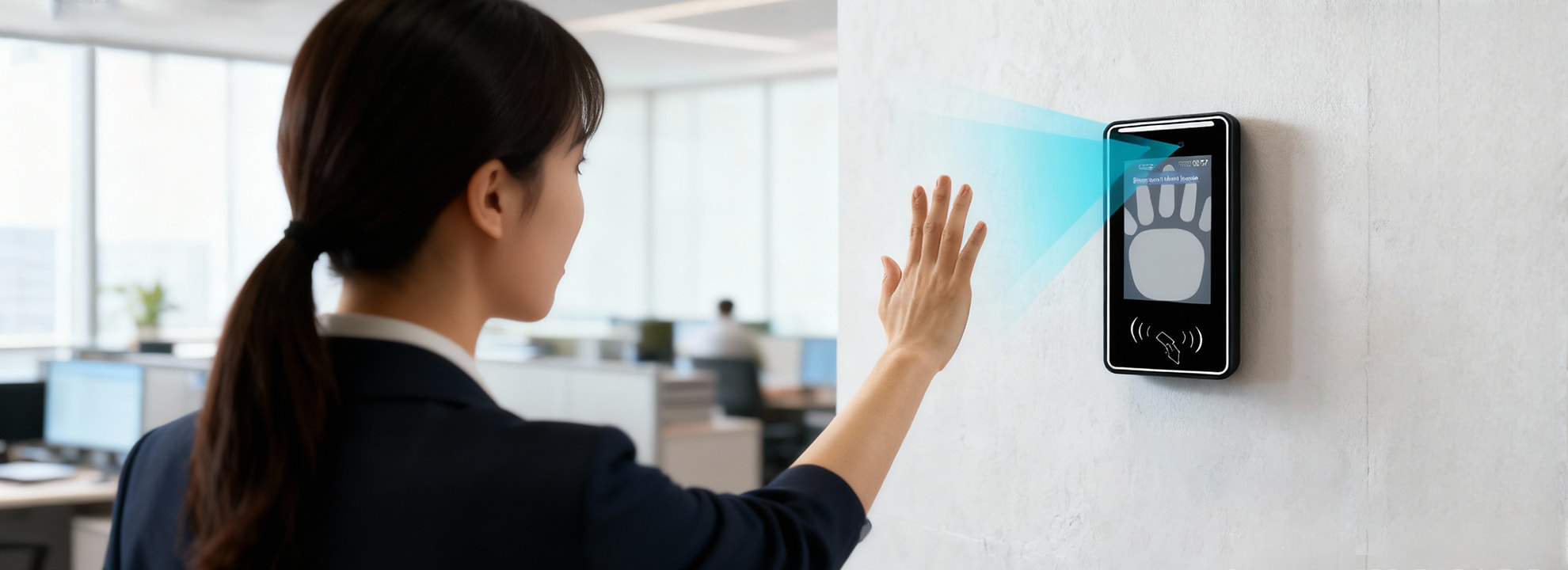
How Accurate Is a Palm Vein Scanner in Real-World Use?
In controlled laboratory testing, palm vein scanners demonstrate extremely high matching accuracy. However, real-world performance depends on several operational factors.
Environmental Stability
Unlike facial recognition systems, palm vein scanners are less affected by:
Lighting conditions
Background interference
Facial obstructions
Because they rely on internal vein patterns rather than surface features, their performance remains stable across different environments.
Resistance to Physical Changes
Fingerprint scanners may struggle with:
Worn fingerprints
Cuts or abrasions
Dry or wet skin
In contrast, a palm vein scanner reads subdermal vein patterns, which remain consistent over time. This significantly improves long-term recognition accuracy.
Anti-Spoofing Capability
One major reason palm vein scanner accuracy is so high is its strong resistance to spoofing attempts. Since vein patterns require active blood flow for detection, artificial replicas cannot easily bypass the system.
This built-in liveness detection enhances both security and accuracy.
Comparison: Palm Vein Scanner vs Other Biometric Technologies
To better understand the accuracy of palm vein scanners, it is helpful to compare them with other common biometric systems.
| Technologie | Accuracy Level | Spoof Resistance | Environmental Sensitivity |
|---|---|---|---|
| Scanner d'empreintes digitales | Haut | Moderate | Moyen |
| Reconnaissance faciale | Haut | Moderate | Haut |
| Nhận dạng mống mắt | Very High | Strong | Faible |
| Palm Vein Scanner | Very High | Very Strong | Very Low |
From a technical perspective, palm vein scanners offer one of the best combinations of high accuracy, low false acceptance rates, and strong anti-spoofing protection.
Factors That Influence Palm Vein Scanner Accuracy
Although palm vein recognition technology is highly reliable, accuracy may vary depending on:
1. Sensor Quality
Higher-resolution infrared sensors produce clearer vein pattern images.
2. Algorithm Optimization
Advanced matching algorithms improve speed and reduce error rates.
3. Proper User Enrollment
Accurate initial registration ensures better future matching performance.
4. System Integration
Well-integrated access control or attendance systems reduce data processing delays.
Selecting a high-quality palm vein scanner device with optimized software significantly enhances authentication accuracy.
Applications That Require High Accuracy
Because of its exceptional accuracy, palm vein scanner technology is widely used in:
Secure access control systems
Time and attendance management
Banking and financial institutions
Government identity verification
Healthcare authentication
Data center security
In these environments, even small improvements in biometric accuracy can prevent major security risks.
The Future of Palm Vein Scanner Accuracy
As artificial intelligence and biometric algorithms continue to improve, palm vein scanner accuracy is expected to become even more refined. Machine learning models are being used to:
Improve matching precision
Reduce processing time
Enhance multi-factor authentication integration
Future palm vein recognition systems may also combine facial recognition or card authentication for layered security solutions.

Conclusion
So, how accurate is a palm vein scanner?
In short, palm vein scanners are among the most accurate biometric authentication devices available today. With extremely low False Acceptance Rates, minimal False Rejection Rates, and strong resistance to spoofing, they provide reliable and secure identification across multiple industries.
For organizations seeking high-level biometric security and consistent authentication performance, a palm vein scanner represents a powerful and future-proof solution.
FAQ
What is the typical accuracy rate of a palm vein scanner?
Most high-quality palm vein scanners offer extremely low false acceptance rates and high matching accuracy, often exceeding 99% under proper operating conditions.
Is a palm vein scanner more accurate than a fingerprint scanner?
Yes. Palm vein scanners generally provide lower false acceptance rates and stronger anti-spoofing protection compared to traditional fingerprint scanners.
Does lighting affect palm vein scanner accuracy?
No. Because palm vein scanners use near-infrared technology to capture internal vein patterns, they are not significantly affected by external lighting conditions.
Can palm vein scanners be fooled?
Palm vein recognition systems are highly resistant to spoofing because they require real blood flow detection, making fake replicas extremely difficult to use successfully.
Are palm vein scanners suitable for large enterprises?
Yes. Palm vein scanner systems can handle large user databases and maintain high accuracy even in enterprise-level deployments.
