
With the rapid development of digital services, organizations worldwide are facing increasing challenges in identity verification. Traditional authentication methods such as passwords, ID cards, and fingerprint recognition may not always provide the required level of security, convenience, and flexibility for modern applications.
As a result, businesses and governments are increasingly adopting advanced biometric technologies to improve identity management. Among different biometric methods, palm vein recognition technology has gained significant attention due to its high accuracy, contactless operation, and strong security performance.
UN mobile handheld palm vein recognition solution combines advanced biometric authentication with portable hardware, allowing users to perform secure identity verification anytime and anywhere. This solution is especially suitable for applications such as KYC enrollment, government registration, financial services, enterprise security, and field authentication.
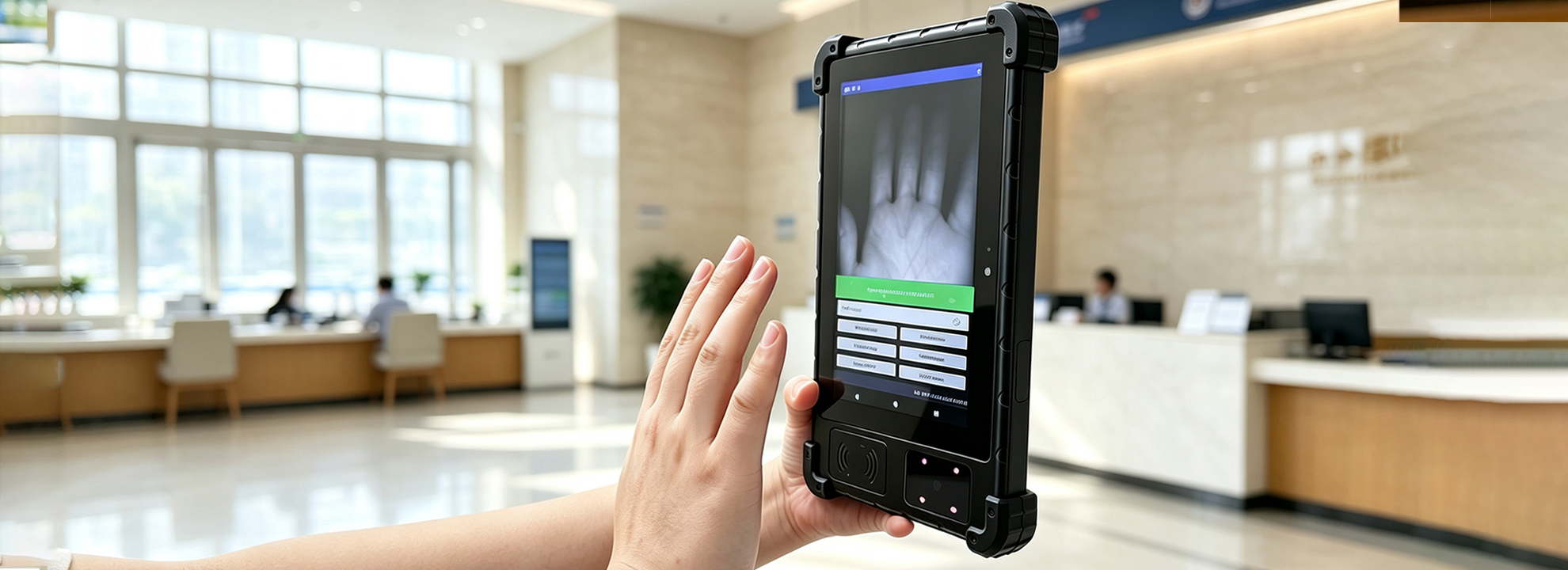
What Is a Mobile Handheld Palm Vein Recognition Solution?
UN mobile handheld palm vein recognition solution is a portable biometric identity verification system that uses near-infrared technology to capture and analyze the unique vein patterns inside a person’s palm.
Unlike traditional biometric technologies that rely on external physical features, palm vein recognition identifies individuals based on internal vascular patterns that are difficult to duplicate or replicate.
A typical handheld palm vein recognition system includes:
- Palm vein recognition sensor
- Embedded biometric algorithm
- Touchscreen or mobile terminal
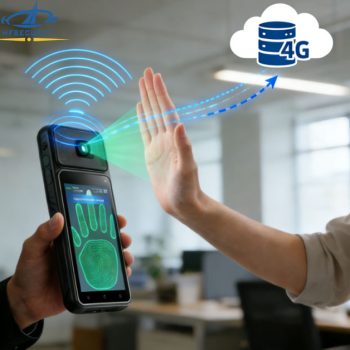
- Data communication module
- Identity verification software platform
- SDK/API integration capability
By integrating hardware and software, organizations can create a complete mobile biometric identity verification workflow for different environments.
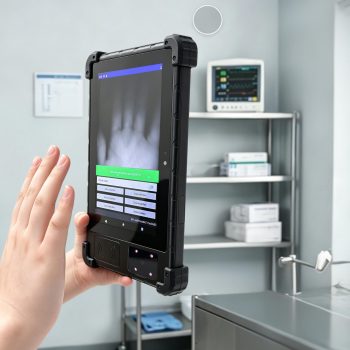
How Does Palm Vein Recognition Technology Work?
Palm vein recognition uses near-infrared light to capture the vein structure beneath the skin surface.
The identification process usually includes three main steps:
1. Palm Vein Image Capture
The handheld biometric device captures the user’s palm vein pattern through a contactless scanning process.
2. Biometric Data Processing
The system extracts unique vein features and converts them into encrypted biometric templates.
3. Identity Verification
The captured biometric information is compared with stored templates to confirm the user’s identity.
Because palm vein patterns are located inside the human body, they remain stable over time and provide excellent protection against unauthorized access.
Why Choose Mobile Palm Vein Recognition for Identity Verification?
1. Higher Security with Unique Internal Biometrics
Security is one of the most important requirements for identity verification systems.
Palm vein patterns are unique to each individual and are located beneath the skin, making them extremely difficult to copy or reproduce.
Compared with traditional authentication methods, palm vein recognition provides:
- Strong biometric uniqueness
- Reduced risk of identity fraud
- Reliable authentication accuracy
- Enhanced data protection
This makes it suitable for high-security applications where accurate identity confirmation is required.
2. Contactless and Hygienic Authentication
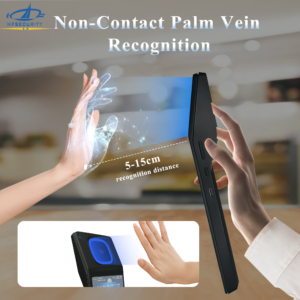
Unlike fingerprint scanners that require physical contact, palm vein recognition enables contactless biometric authentication.
Users only need to place their palm above the sensor area for scanning.
This provides advantages such as:
- Improved user experience
- Reduced physical contact
- Better hygiene management
- Vérification d'identité plus rapide
Therefore, mobile palm vein recognition solutions are becoming increasingly popular in healthcare, public services, and enterprise environments.
3. Portable Design for Flexible Deployment
Traditional biometric systems are usually installed in fixed locations. However, many industries require identity verification in remote or mobile scenarios.
A handheld palm vein recognition device enables organizations to perform authentication in different locations, including:
- Government registration sites
- Banking service points
- Remote customer onboarding
- Field workforce management
- Enterprise security checkpoints
The portable design improves operational efficiency and expands biometric applications beyond traditional access control environments.
Key Applications of Mobile Handheld Palm Vein Recognition Solutions
Government Identity Verification and Citizen Services
Government agencies require reliable identity verification solutions for citizen registration, public services, and secure authentication.
Mobile palm vein recognition devices can support:
- Digital identity enrollment
- Citizen verification
- Social service authentication
- Public security applications
The portable design allows government teams to conduct identity verification in different locations without relying on fixed infrastructure.
Enterprise Workforce Management
Large organizations often require secure employee authentication across multiple locations.
Mobile palm vein recognition solutions can be applied to:
- Employee registration
- Mobile attendance management
- Workforce verification
- Remote employee authentication
For industries such as construction, manufacturing, logistics, and energy, portable biometric devices provide a practical way to manage distributed teams.
KYC and Financial Services
Financial institutions are continuously improving customer onboarding and identity verification processes.
A handheld biometric identity verification terminal can help banks and financial service providers achieve:
- Secure customer identification
- Remote account opening
- Fraud prevention
- Faster KYC processes
By combining palm vein authentication with mobile connectivity, organizations can provide safer and more convenient financial services.
Healthcare and Medical Services
Healthcare organizations need accurate patient identification to prevent errors and improve service efficiency.
Palm vein biometric solutions can support:
- Patient identity verification
- Medical record access
- Healthcare service authentication
The contactless feature also makes palm vein recognition suitable for environments with strict hygiene requirements.
Integration and Customization for Different Applications
Modern biometric projects often require integration with existing software platforms.
A professional mobile palm vein recognition solution provider should support flexible development options, including:
- SDK integration
- API support
- Customized software development
- OEM and ODM services
With integration capabilities, system integrators and software developers can easily connect biometric hardware with:
- Identity management platforms
- KYC systems
- Attendance software
- Access control platforms
- Enterprise applications
This flexibility allows organizations to build customized biometric solutions according to their business requirements.
Why Choose HFSecurity Mobile Palm Vein Recognition Solutions?
HFSecurity provides advanced biometric identification technologies and complete identity verification solutions for global customers.
Our advantages include:
1. Professional Biometric Manufacturing Experience
With more than 20 years of experience in biometric technology development and manufacturing, HFSecurity provides reliable hardware solutions for different industries.
2. Complete Biometric Solution Support
We provide:
- Palm vein recognition devices
- Mobile biometric terminals
- SDK and API integration support
- OEM/ODM customization services
- Technical solution assistance
3. Designed for Global Applications
Our biometric solutions are widely used in:
- Government projects
- Enterprise security
- Financial services
- Workforce management
- Identity verification systems
Conclusion: The Future of Mobile Identity Verification
As digital transformation continues worldwide, secure and convenient identity verification has become essential for organizations across different industries.
UN mobile handheld palm vein recognition solution provides a powerful combination of portability, security, and contactless authentication. By using advanced palm vein biometric technology, organizations can improve identity verification accuracy while creating more efficient digital experiences.
For businesses, governments, and system integrators looking for a reliable biometric identity verification solution, mobile palm vein recognition technology represents an important step toward the future of secure authentication.
