


Choosing the right biometric attendance machine is critical for organizations that want accurate workforce tracking, improved security, and efficient payroll management. Two of the most widely used technologies today are the face recognition attendance machine and the fingerprint attendance machine.Lorem ipsum dolor sit amet, consectetur adipiscing elit. Ut elit tellus, luctus nec ullamcorper mattis, pulvinar dapibus leo.
Both systems are designed to eliminate buddy punching, reduce time fraud, and automate attendance records. However, they differ significantly in terms of security level, environmental adaptability, hygiene, and long-term reliability.
So, when comparing face recognition vs fingerprint attendance machine, which one is better? This article provides a detailed, professional comparison to help businesses make an informed decision.
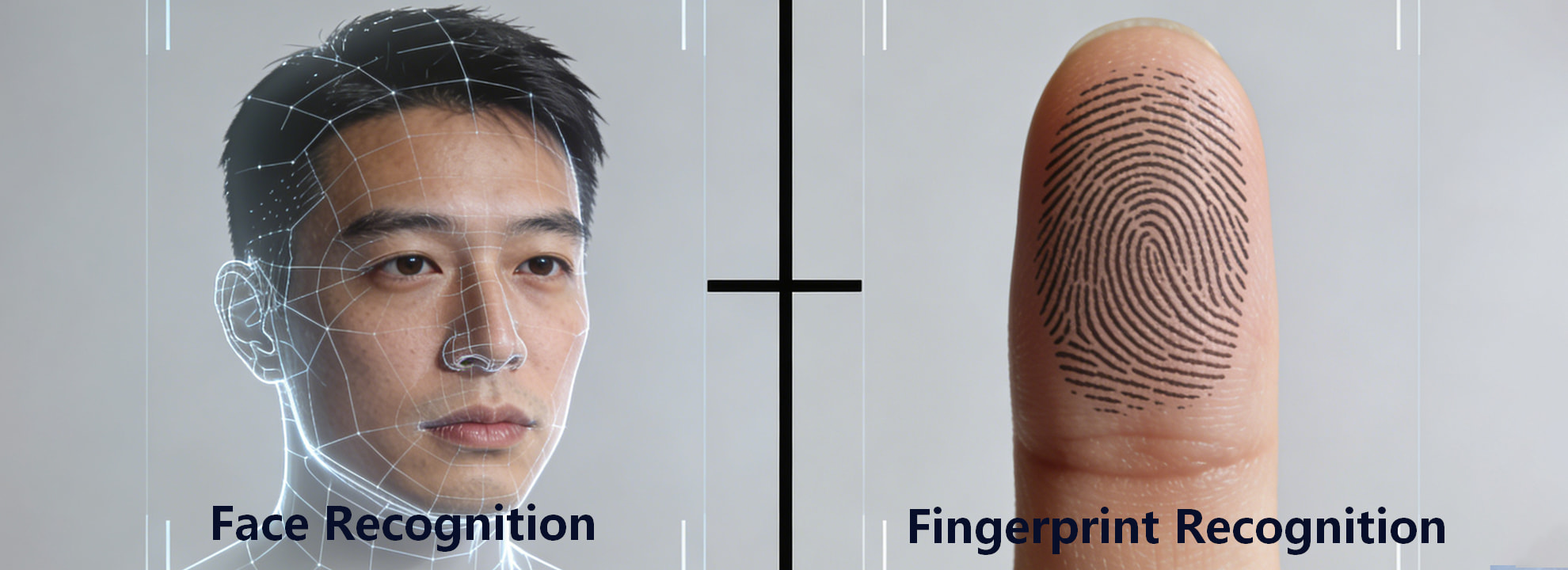
What Is a Face Recognition Attendance Machine?
A face recognition attendance machine uses AI-powered facial recognition technology to identify employees based on their facial features. The system captures a live image and matches it against a stored database template.
Key characteristics:
Contactless authentication
Fast recognition speed
Suitable for high-traffic environments
Can integrate with access control systems
Face recognition attendance systems are widely used in offices, schools, hospitals, and commercial buildings where touch-free verification is preferred.
What Is a Fingerprint Attendance Machine?
A fingerprint attendance machine identifies users by scanning their fingerprint patterns. It compares the scanned fingerprint with stored biometric templates to verify identity.
Core features:
High biometric uniqueness
Mature and widely adopted technology
Cost-effective deployment
Compact device options
Fingerprint attendance machines have been a dominant solution in workforce management for many years due to their affordability and reliability.
Face Recognition vs Fingerprint Attendance Machine: Key Comparison
1. Security Level
Fingerprint Attendance Machine:
Fingerprint patterns are unique and difficult to duplicate. However, lower-end systems may be vulnerable to spoofing if they lack advanced liveness detection.
Face Recognition Attendance Machine:
Modern AI-based face recognition systems offer strong security, especially with anti-spoofing technology. However, 2D systems may be less secure than 3D or infrared-based facial recognition solutions.
Conclusion
Both systems provide strong security when equipped with advanced algorithms, but high-end implementations are essential.
2. Accuracy and Reliability
Accuracy is measured by false acceptance rate (FAR) and false rejection rate (FRR).
Fingerprint attendance machines generally provide very high accuracy under controlled conditions.
Face recognition attendance machines perform well but may be influenced by lighting, facial accessories, or camera positioning.
In stable environments, both systems can achieve high recognition accuracy. However, fingerprint systems may struggle if users have worn, damaged, or dirty fingers.
3. Speed of Authentication
Face recognition attendance machines typically offer faster authentication because:
No physical contact is required
Multiple users can be recognized quickly
Advanced AI algorithms process images rapidly
Fingerprint attendance machines require physical contact, which can slightly slow down processing during peak hours.
For high-traffic offices, facial recognition may offer smoother user flow.
4. Hygiene and Contactless Operation
This is one of the biggest differences.
Face Recognition Attendance Machine: 100% contactless
Fingerprint Attendance Machine: Requires physical touch
In healthcare facilities, food processing industries, and hygiene-sensitive environments, contactless biometric attendance systems are often preferred.
5. Environmental Adaptability
Fingerprint systems may experience reduced accuracy due to:
Wet fingers
Dry skin
Dust or industrial residue
Face recognition systems may face challenges with:
Poor lighting
Strong backlight
Face masks or heavy facial coverings
Each technology performs best in specific environments.
6. Installation and Cost
Fingerprint attendance machines are typically:
More affordable
Easier to deploy
Suitable for small businesses
Face recognition attendance machines:
May have higher initial cost
Require proper camera positioning
Offer advanced AI-based features
Budget and business scale often influence the final decision.
Which Attendance Machine Is Better for Your Business?
Fingerprint recognition attendance

face recognition attendance

The answer depends on operational requirements.
Choose a Face Recognition Attendance Machine if:
You need contactless authentication
Your environment requires high hygiene standards
You manage high employee traffic
You prefer modern AI-based solutions
Choose a Fingerprint Attendance Machine if:
You need a cost-effective solution
Your workforce operates in controlled indoor environments
You prefer proven and stable biometric technology
For enterprises seeking enhanced flexibility, multi-biometric attendance machines combining face and fingerprint recognition are becoming increasingly popular.
Future Trends in Biometric Attendance Systems
The future of attendance management is moving toward:
Contactless authentication
AI-enhanced recognition algorithms
Cloud-based attendance systems
Integration with access control and payroll software
Many organizations now adopt hybrid systems that integrate facial recognition, fingerprint authentication, and even palm vein recognition for layered security.
Final Verdict: Face Recognition vs Fingerprint Attendance Machine
When comparing face recognition vs fingerprint attendance machine, there is no universal winner. Both technologies provide reliable biometric authentication for workforce management.
Facial recognition offers speed, convenience, and hygiene.
Fingerprint recognition provides affordability and proven stability.
The best choice depends on your industry, budget, security level, and operational environment.
FAQ
Is face recognition more accurate than fingerprint attendance machines?
Both technologies offer high accuracy. However, fingerprint systems may perform better in controlled environments, while advanced face recognition systems excel in high-traffic, contactless scenarios.
Which attendance machine is more secure?
Security depends on the device quality and algorithm. High-end face recognition and fingerprint attendance machines both provide strong biometric security when equipped with anti-spoofing features.
Is a fingerprint attendance machine outdated?
No. Fingerprint attendance machines remain widely used and effective. However, many businesses are upgrading to contactless biometric attendance systems for hygiene and convenience.
Can face recognition attendance machines work with access control systems?
Yes. Most face recognition attendance machines can integrate with access control systems, enabling both entry management and attendance tracking.
What is the best attendance machine for small businesses?
For small businesses with limited budgets, a fingerprint attendance machine is often cost-effective. For companies prioritizing modern and contactless solutions, face recognition systems may be the better option.
