Why Traditional Border Identity Verification Needs to Evolve
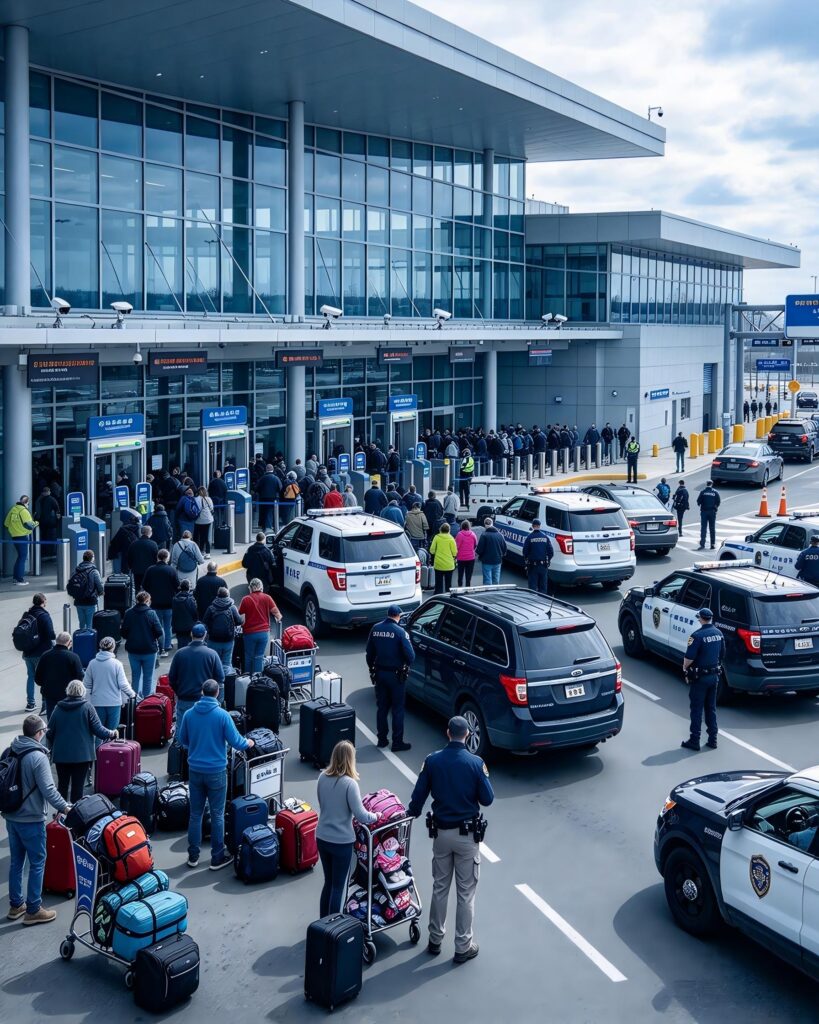
Traditional border control procedures generally involve checking travel documents, comparing photographs, and verifying passenger information against relevant databases.
However, as international mobility increases, several challenges have become more apparent.
Increasing Passenger Volumes
Airports, land border checkpoints, and seaports must handle growing numbers of travelers. Manual inspection processes can create bottlenecks, particularly during peak travel periods.
Identity Fraud and Document Misuse
Stolen, altered, or counterfeit travel documents present ongoing security risks. Even when a document is authentic, authorities still need to establish whether the person presenting it is its rightful holder.
Limited Verification Efficiency
Repeated manual checks and fragmented verification processes can increase processing time and operational workloads, making it difficult to maintain consistent inspection efficiency.
Disconnected Identity Management Systems
Different checkpoints and government departments may operate separate identification systems. Without effective data integration, identity information can be difficult to manage and verify consistently.
These challenges demonstrate why modern border management solutions increasingly require more than document inspection. They need reliable identity verification technologies that connect biometric recognition, document authentication, and secure information management.
How Biometric Technology Strengthens Identity Verification
Biometric technology identifies or verifies individuals through distinctive physical characteristics. Unlike passwords or identification numbers, biometric characteristics are directly associated with the individual.
In border management applications, biometric recognition provides an additional layer of identity assurance by comparing a person’s biometric characteristics with previously enrolled or authorized records.
Different biometric modalities serve different operational requirements.
التعرف على الوجه
Facial recognition analyzes distinctive facial features captured through cameras to verify or identify individuals.
In border control environments, facial recognition can support:
1. Automated identity verification at immigration checkpoints.
2. Self-service immigration and inspection kiosks.
3. Passenger identity matching against registered records.
4. Access control in restricted government and security areas.
Its contactless operation and compatibility with camera-based infrastructure make facial recognition particularly suitable for high-throughput identity verification environments.
التعرف على البصمة
التعرف على بصمات الأصابع identifies individuals by analyzing the unique ridge patterns of their fingerprints.
It is widely used in identity registration and verification processes, particularly where reliable biometric enrollment and database matching are required.
Fingerprint systems can support identity verification at registration stations, government service centers, and border inspection facilities.
التعرف على القزحية
التعرف على القزحية uses the distinctive patterns of the human iris to establish biometric identity.
Due to its highly distinctive biometric characteristics, iris recognition can be considered for applications requiring additional identity assurance, especially in specialized identity registration and verification environments.
التعرف على عروق الكف
التعرف على وريد الكف analyzes the vein patterns beneath the skin using near-infrared imaging technology.
As an internal biometric characteristic, palm vein patterns provide another approach to identity verification. The technology can be particularly useful in applications where contactless or hygienic biometric authentication is preferred.
Multimodal Biometric Identification
No single biometric modality is suitable for every border management environment.
Multimodal biometric systems combine two or more recognition methods, such as facial recognition, fingerprint recognition, iris recognition, or palm vein recognition.
Depending on security requirements and operational conditions, authorities can select different biometric combinations to support identity verification.
This approach provides greater flexibility in system design and can help improve verification reliability when multiple independent biometric characteristics are evaluated together.
Key Applications of Biometric Technology in Border Management
Biometric identity verification is not limited to a single inspection point. It can be incorporated into different stages of border management, from identity enrollment to passenger inspection and access authorization.
Automated Border Control
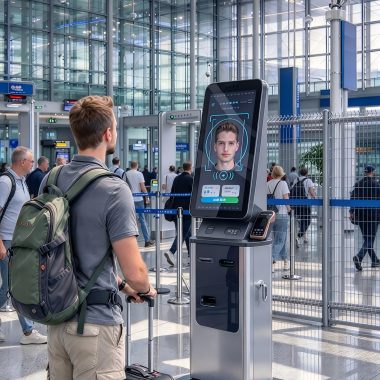
Automated border control systems use biometric technologies to support identity verification at designated checkpoints.
For example, a traveler can present a travel document while a facial recognition system captures and compares facial characteristics against the corresponding identity record.
When the verification requirements are satisfied, the system can communicate with the relevant access control infrastructure to support the next inspection step.
This helps reduce dependence on repetitive manual checks while maintaining controlled border inspection procedures.
National Identity Registration
Government identity programs require reliable methods to register, store, and verify citizens’ or residents’ identity information.
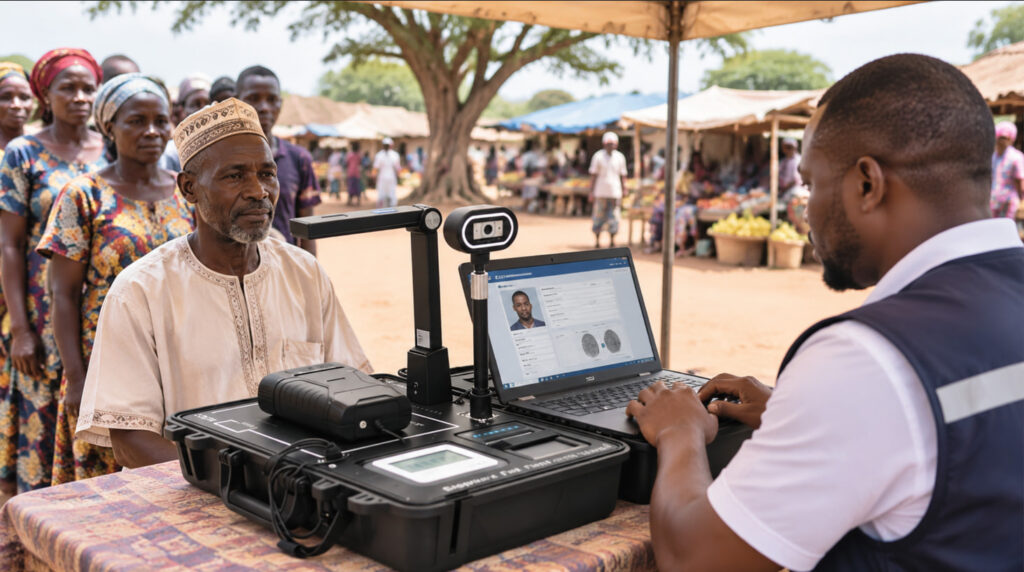
Biometric enrollment devices can capture facial images, fingerprints, iris patterns, and other biometric characteristics for identity registration.
These records can then support subsequent identity verification across authorized government services and identification systems.
Immigration and Passenger Identity Verification
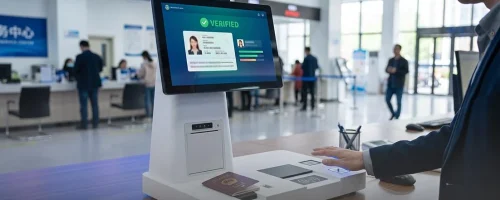
At airports, seaports, and land border checkpoints, biometric technology can help match travelers with their registered identity records.
When integrated with travel document verification and relevant databases, biometric systems can support more consistent passenger identification and inspection workflows.
Restricted Area Access Management
Border facilities often contain restricted areas requiring controlled personnel access.
Biometric access control systems can verify authorized personnel before granting entry to designated locations, helping strengthen security management within border infrastructure.
What Makes an Effective Border Security Solution?
Deploying biometric technology is not simply a matter of installing recognition devices. Effective border security solutions require coordinated hardware, software, data management, and system integration.
Several technical considerations are particularly important.
Recognition Accuracy and Environmental Adaptability
Biometric devices must deliver consistent performance under different lighting conditions, environmental factors, and operational scenarios. Image quality, biometric enrollment standards, and recognition algorithms all influence verification results.
Liveness Detection and Anti-Spoofing
Systems should incorporate appropriate presentation attack detection and anti-spoofing mechanisms to help identify attempts involving photographs, artificial fingerprints, or other fraudulent biometric presentations.
System Integration and Interoperability
Biometric equipment should be capable of integrating with existing border management platforms, identity databases, document verification systems, and access control infrastructure through suitable interfaces and APIs.
Data Security and Privacy Protection
Biometric information is highly sensitive personal data. Secure storage, encrypted transmission, access authorization, audit mechanisms, and appropriate data retention policies are essential considerations in system deployment.
Scalability and Operational Reliability
Large-scale border projects may involve multiple checkpoints, enrollment stations, and verification terminals. Hardware and software architectures should accommodate different deployment sizes while maintaining stable operation and centralized management.
Ultimately, successful biometric border management depends on how effectively these technologies work together within an integrated identity verification infrastructure.
The Future of Biometric Identity Verification
As international mobility continues to develop, border management is moving toward more integrated, automated, and data-driven operations.
Several technology trends are expected to play an increasingly important role.
Multimodal biometric integration: Combining multiple biometric modalities to accommodate different identity verification and security requirements.
AI-powered recognition: Improving biometric image processing, matching performance, and automated identity analysis.
تحديد الهوية بدون تلامس: Expanding the use of facial and palm vein recognition to support convenient and hygienic verification processes.
Integrated identity platforms: Connecting biometric hardware, enrollment systems, identity databases, and verification software into coordinated infrastructure.
Flexible system customization: Adapting hardware configurations, software interfaces, and API integration to meet different national and regional project requirements.
These developments will continue to shape the next generation of border management solutions, where identity verification, operational efficiency, and information security must work together.
Meet HFSecurity at BMIC8 Thailand 2026
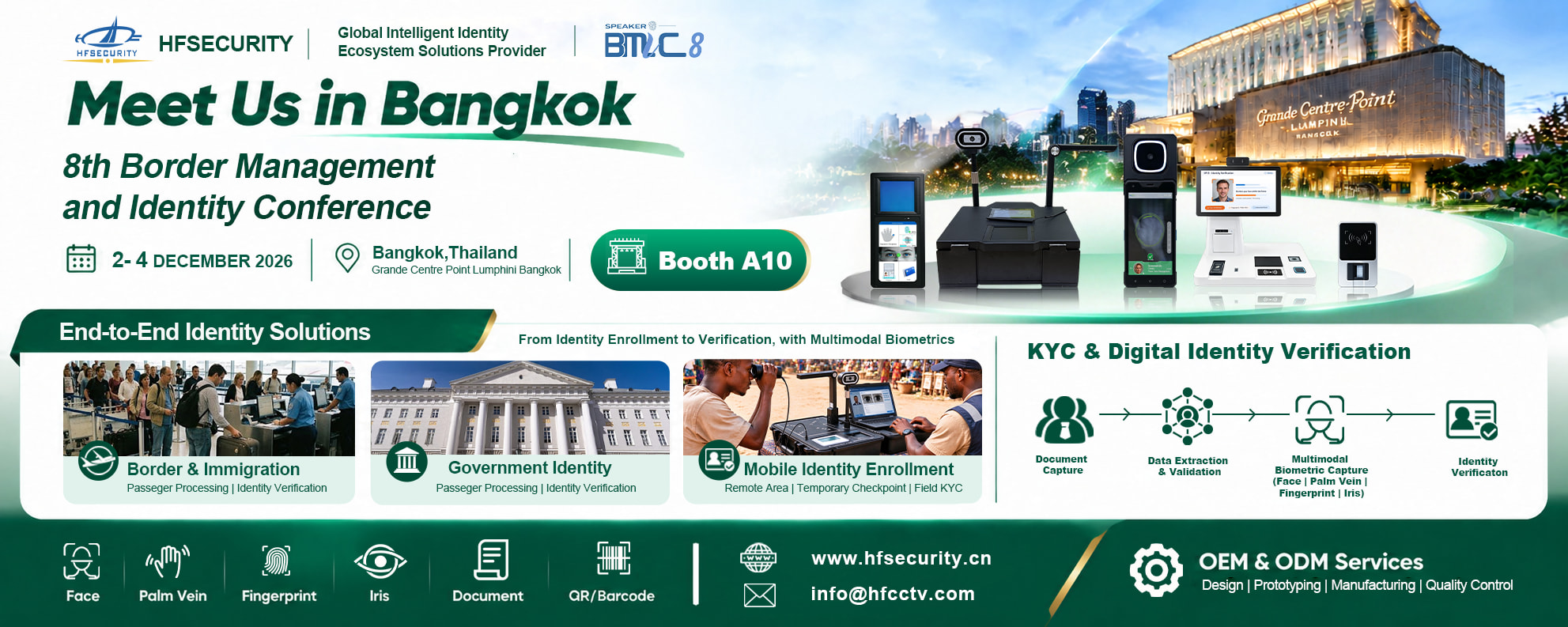
As biometric technology continues to advance in border security and identity management, industry collaboration and technology exchange remain important for developing practical solutions.
HFSecurity will participate in the 8th Border Management and Identity Conference (BMIC8) 2026 in Bangkok, Thailand.
With more than 21 years of biometric technology expertise since 2005, HFSecurity provides biometric hardware and customized identification solutions covering facial recognition, fingerprint recognition, palm vein recognition, iris recognition, and multimodal biometric technologies.
We look forward to exchanging insights with industry professionals and exploring the evolving applications of biometric technology in identity registration, verification, and security management.
Event: 8th Border Management and Identity Conference 2026
Date: December 2–4, 2026
Venue: Grande Centre Point Lumphini, Bangkok, Thailand
Booth: A10
