What Is Palm Scan Technology?
Palm scan, also known as palm vein recognition, is an advanced biometric authentication technology that identifies individuals based on the unique vein patterns inside their palm.
By using near-infrared light, the system captures the internal vein structure beneath the skin. These vein patterns are:
- Unique to each individual
- Hidden from external view
- Extremely difficult to replicate or forge
Because it relies on internal biological features, palm scan is considered one of the most secure and reliable biometric identification technologies available today.
Key Characteristics of Palm Scan:
- Contactless biometric authentication
- High security with anti-spoofing capability
- Stable performance in different environments
- Suitable for high-end access control solutions
In recent years, palm vein recognition has been increasingly adopted in smart buildings, enterprise access control, healthcare systems, and high-security facilities, where both security and hygiene are critical.
What Is Fingerprint Recognition?
Fingerprint recognition is a traditional biometric method that identifies individuals based on the ridge patterns on their fingertips.
It has been widely used for decades in:
- أنظمة التحكم في الوصول
- آلات الحضور والانصراف
- Mobile devices
- Identity verification systems
Due to its mature technology and lower cost, fingerprint recognition remains one of the most popular biometric solutions worldwide.
Key Characteristics of Fingerprint Recognition:
- Easy to deploy and widely accepted
- Fast identification speed
- Cost-effective for large-scale projects
- Suitable for general access control and attendance management
However, since it relies on external features, fingerprint recognition can sometimes be affected by environmental conditions such as dirt, moisture, or skin wear.
Palm Scan vs Fingerprint Recognition: Key Differences
Security and Anti-Spoofing Capability
Palm scan uses internal vein patterns beneath the skin, which are extremely difficult to copy or reproduce. It can also detect real blood flow, making it highly resistant to spoofing attempts.
Fingerprint recognition relies on external skin patterns, which can be affected in real-world use. For example, recognition accuracy may decrease when:
- Fingers are wet, oily, or dirty
- The skin is dry, cracked, or worn
- There are cuts, scars, or surface damage
👉 Higher security and reliability: Palm Scan
Contactless vs Touch-Based Authentication
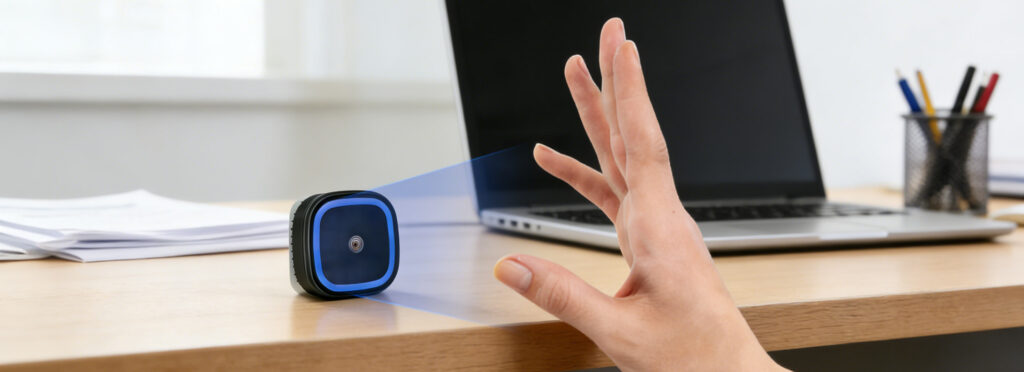
Palm scan is a fully contactless biometric system, allowing users to authenticate without touching the device. This is especially important in environments where hygiene and user flow matter.
Fingerprint recognition requires physical contact, which may cause issues in:
- High-traffic areas with frequent use
- Public environments where hygiene is a concern
- Situations where users hesitate to touch shared devices
👉 Better for hygiene and user experience: Palm Scan
Accuracy and Real-World Performance
Palm vein recognition maintains stable performance across different environments and user conditions. It works well even when:
- Hands are slightly dirty or not perfectly clean
- Lighting conditions change
- Users have worn fingerprints
Fingerprint recognition may experience reduced accuracy in cases such as:
- Improper finger placement
- Low-quality or damaged fingerprints
- Environmental interference (dust, moisture)
👉 More consistent performance: Palm Scan
Speed and User Experience
Palm scan offers a fast and seamless authentication experience, as users only need to hover their hand over the device without precise positioning.
Fingerprint recognition is also fast but may require:
- Correct finger placement
- Multiple attempts if recognition fails
In high-flow environments, this can affect efficiency.
👉 Smoother user experience in modern systems: Palm Scan
Cost and Deployment Flexibility
Fingerprint recognition is generally more cost-effective and easier to deploy, making it ideal for:
- Small and medium-sized businesses
- Attendance systems
- Budget-sensitive projects
Palm scan technology is typically used in:
- High-security environments
- Smart buildings and enterprise systems
- Projects requiring long-term scalability
👉 More budget-friendly: Fingerprint
👉 More advanced and future-ready: Palm Scan
Applications in Access Control Systems
Both palm scan and fingerprint recognition are widely used in biometric access control systems and identity verification solutions, but their application scope is expanding beyond traditional security use cases.
Palm Scan Applications
Palm scan technology is widely used in high-security and contactless biometric systems, including:
- Smart offices and enterprise access control
- Healthcare and hospital identity verification
- Airports and transportation security systems
- Government and high-security facilities
- Smart campuses and industrial parks
Beyond traditional access control, palm vein recognition is also expanding into biometric payment applications (palm vein payment). Users can complete transactions by simply scanning their palm, enabling a fully contactless and card-free payment experience, which is increasingly applied in smart retail, campus systems, and unmanned payment scenarios.

Fingerprint Recognition Applications
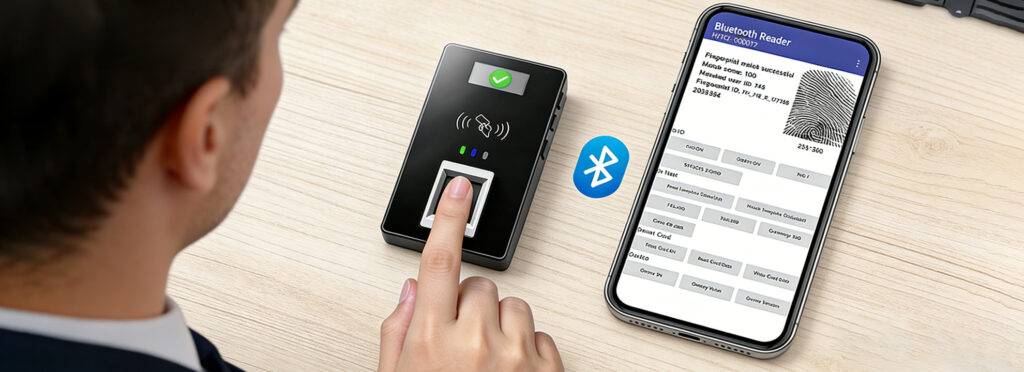
التعرف على بصمات الأصابع is more commonly used in cost-sensitive and widely deployed scenarios, such as:
- Office attendance systems
- Residential and commercial access control
- Small and medium business security systems
- Basic identity verification applications
It remains a practical solution for traditional biometric authentication needs, especially where budget efficiency and fast deployment are priorities.
Which Biometric Technology Should You Choose?
Choosing between palm scan and fingerprint recognition depends on your project requirements:
- Choose palm scan if you need:
- Higher security
- Contactless authentication
- Better performance in complex environments
- Choose fingerprint recognition if you need:
- Lower cost
- Simple deployment
- Proven and widely accepted technology
In many modern systems, combining multiple technologies (such as palm scan, facial recognition, and card access) is becoming a growing trend.
The Future of Biometric Authentication
As industries move toward contactless, secure, and intelligent systems, palm vein recognition is becoming increasingly important.With advantages in security, hygiene, and stability, palm scan technology is playing a key role in the next generation of biometric access control and identity verification systems.
خاتمة
Understanding the difference between palm scan and fingerprint recognition is essential when selecting a biometric solution.
While fingerprint recognition remains a practical and cost-effective option, palm scan stands out with its higher security, better user experience, and stronger adaptability.
For businesses looking to upgrade their access control systems, palm scan offers a more advanced and future-ready solution.
