In this article, we will explore how touchless attendance systems work, their key benefits, and why more businesses are replacing traditional methods with modern contactless attendance solutions.
What Is a Touchless Attendance System?
A touchless attendance system is a biometric time tracking solution that identifies employees without requiring physical interaction. Instead of fingerprint scanners or PIN codes, the system uses:
Facial recognition attendance
Palm vein recognition attendance
Other contactless verification methods (RFID or mobile credentials)
These technologies ensure accurate employee attendance tracking while reducing health risks and improving convenience in the workplace.
Core Technologies Behind Touchless Attendance
Facial Recognition Attendance
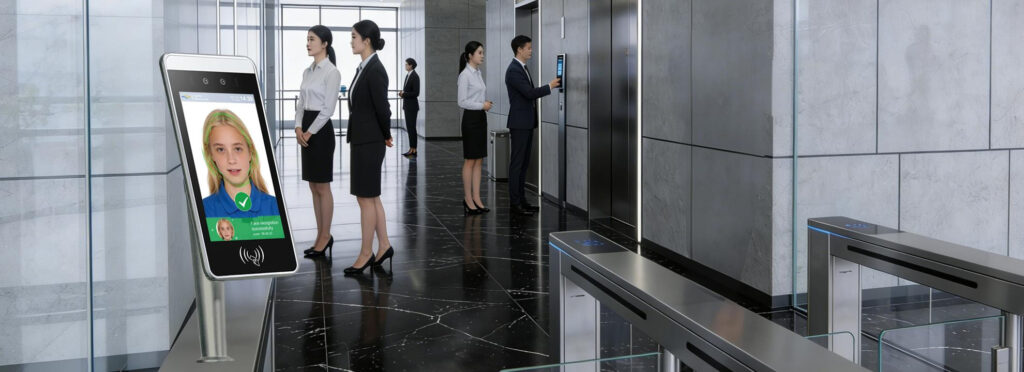
Facial recognition attendance systems use AI-powered cameras to analyze facial features and match them with stored templates. The process is fast, non-intrusive, and highly accurate, making it ideal for office entrances and high-traffic environments.
Palm Vein Recognition Attendance
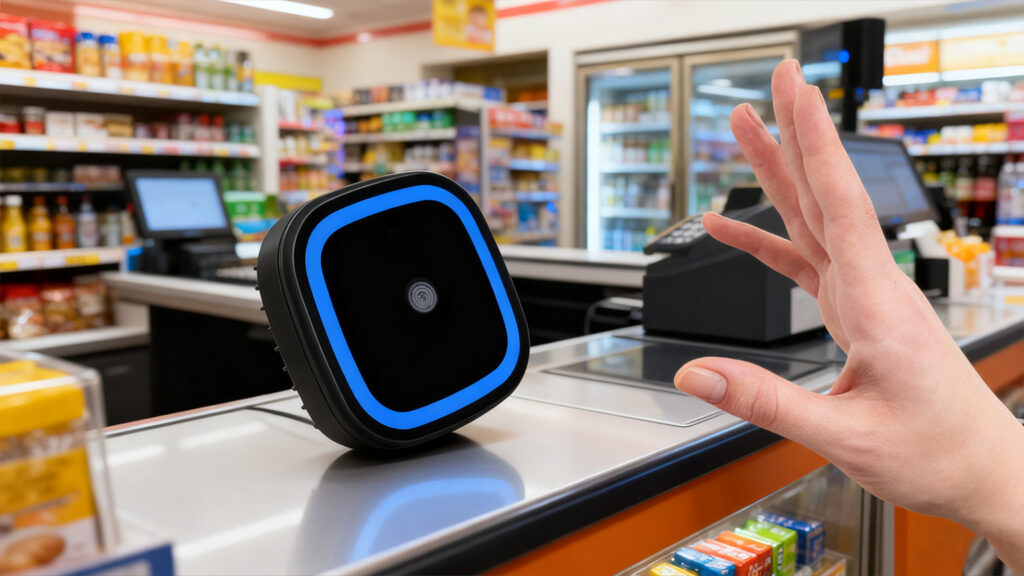
Palm vein recognition is an advanced contactless biometric technology that scans the unique vein patterns inside a person’s palm. Because vein patterns are internal and nearly impossible to replicate, this method offers:
Extremely high security
Strong resistance to spoofing or fake identities
Stable performance under different lighting conditions
Palm vein systems are widely used in environments that demand higher biometric security, such as research facilities, financial institutions, and government buildings.
How a Touchless Attendance System Works
A touchless biometric attendance system for workplaces typically follows these steps:
1. Biometric Enrollment
Employees enroll their facial data and/or palm vein data into the system. The biometric templates are encrypted and securely stored.
2. Contactless Identification
When an employee approaches the device, the system captures facial features or scans the palm vein pattern without physical contact.
3. Instant Verification
The captured biometric data is compared with stored templates. Within seconds, the system verifies identity with high accuracy.
4. Automatic Attendance Recording
After successful verification, the system logs the check-in or check-out time automatically and sends the data to the attendance management platform.
Palm vein recognition for attendance tracking
Facial recognition attendance system
Benefits of Touchless Attendance Systems for Workplaces
1. Enhanced Workplace Hygiene
A contactless attendance system minimizes shared touchpoints, making it ideal for health-conscious workplaces such as hospitals, corporate offices, and public institutions.
2. Stronger Biometric Security
By combining facial recognition and palm vein recognition, organizations gain multi-layered biometric protection. Palm vein technology, in particular, provides a higher level of identity verification because vein patterns are internal and unique.
3. Faster and Smoother Access
Employees can pass through entry points quickly without stopping to touch a device. This improves traffic flow during peak hours and reduces delays at workplace entrances.
4. Prevention of Time Fraud
A touchless biometric attendance system prevents buddy punching and identity sharing. Since both face and palm vein data are unique to each individual, attendance records remain accurate and tamper-resistant.
5. Real-Time Attendance Monitoring
Managers can access real-time employee attendance data through integrated software dashboards, enabling better workforce planning and productivity analysis.
Touchless Attendance vs Traditional Biometric Systems
| Feature | Fingerprint Attendance | Touchless Attendance System |
|---|---|---|
| Physical Contact | Required | Not required |
| Hygiene | Lower | Higher |
| Security Level | High | Very High (Face + Palm Vein) |
| User Experience | Slower during peak hours | Fast and seamless |
| Fraud Prevention | Good | Excellent |
As shown above, a touchless attendance system for workplaces offers improved safety, speed, and security compared to traditional fingerprint-based systems.
Ideal Use Cases for Touchless Biometric Attendance
Touchless attendance solutions are suitable for many industries, including:
Corporate offices seeking modern and professional attendance management
Manufacturing plants with large workforces and shift-based operations
Healthcare facilities where contactless systems support hygiene standards
Financial institutions requiring high-security biometric verification
Government and research centers where palm vein recognition enhances security
Because of their flexibility, touchless facial and palm vein attendance systems can be deployed in both small businesses and large enterprises.
Integration with Attendance and HR Software
A modern touchless attendance system integrates seamlessly with:
Attendance management software
HR management systems
Payroll platforms
Cloud-based workforce management tools
This ensures automated data synchronization, reduces manual errors, and improves administrative efficiency.
The Future of Touchless Attendance Technology
As biometric technology advances, touchless attendance systems for workplaces will continue to evolve. Future developments may include enhanced AI accuracy, multi-biometric fusion, and deeper integration with smart building systems.
With growing demand for safer and smarter workplaces, facial recognition and palm vein recognition attendance systems are set to become the standard in modern workforce management.
Conclusion
A touchless attendance system for workplaces powered by facial recognition and palm vein recognition offers the perfect balance of hygiene, security, and efficiency. By adopting contactless biometric technology, organizations can modernize attendance tracking, prevent time fraud, and create a safer working environment.
As businesses embrace digital transformation, touchless attendance solutions are no longer optional — they are becoming essential for smart and secure workplace management.
