


Iris scanning has rapidly emerged as one of the most advanced biometric technologies for access control. Unlike traditional security methods like passwords, PIN codes, or card-based systems, iris recognition relies on the intricate and unique patterns in the human eye, which are extremely difficult to duplicate or forge.
With increasing threats to physical and digital security, organizations are looking for reliable, non-intrusive, and fast authentication systems. But how secure is iris scanning for access control, and why is it becoming the preferred choice for high-security environments? This article explores its security features, benefits, industry applications, and practical considerations, providing a comprehensive guide for businesses, government institutions, and other organizations.
What Is Iris Scanning?
Iris scanning is a biometric identification method that uses near-infrared light to capture the unique patterns in the iris of the eye. These patterns are highly detailed and remain stable throughout a person’s lifetime, making iris scanning one of the most accurate forms of biometric authentication.
Key features of iris scanning include:
High accuracy: False Acceptance Rate (FAR) is extremely low, often less than 0.001%.
Non-contact authentication: Hygienic and convenient, with no physical contact required.
Fast recognition: Authentication typically occurs in 1–2 seconds.
Versatility: Works effectively under various lighting conditions.
Long-term stability: Unlike fingerprints or facial recognition, iris patterns do not change significantly with age.
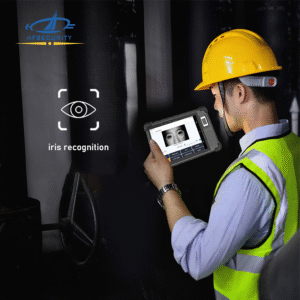

How Secure Is Iris Scanning?
Iris scanning provides exceptionally high security for access control due to multiple factors:
1. Uniqueness of Iris Patterns
Every individual’s iris contains thousands of unique characteristics, even among identical twins. This makes it extremely difficult for an unauthorized person to replicate or bypass the system. The complexity of the iris ensures that false acceptance rates remain minimal, providing a secure authentication mechanism.
2. Anti-Spoofing and Liveness Detection
Modern iris scanners include advanced anti-spoofing technology. This prevents fraudulent attempts using printed photos, contact lenses, or artificial eyes. Liveness detection ensures the system authenticates only a real, live person, significantly enhancing security.
3. Encrypted Data Storage
Biometric templates generated by iris scanning devices are stored in encrypted formats, preventing unauthorized access or tampering. Even if a database is compromised, the encrypted data ensures that it cannot be misused or reverse-engineered to spoof the system.
4. Multi-Factor Integration
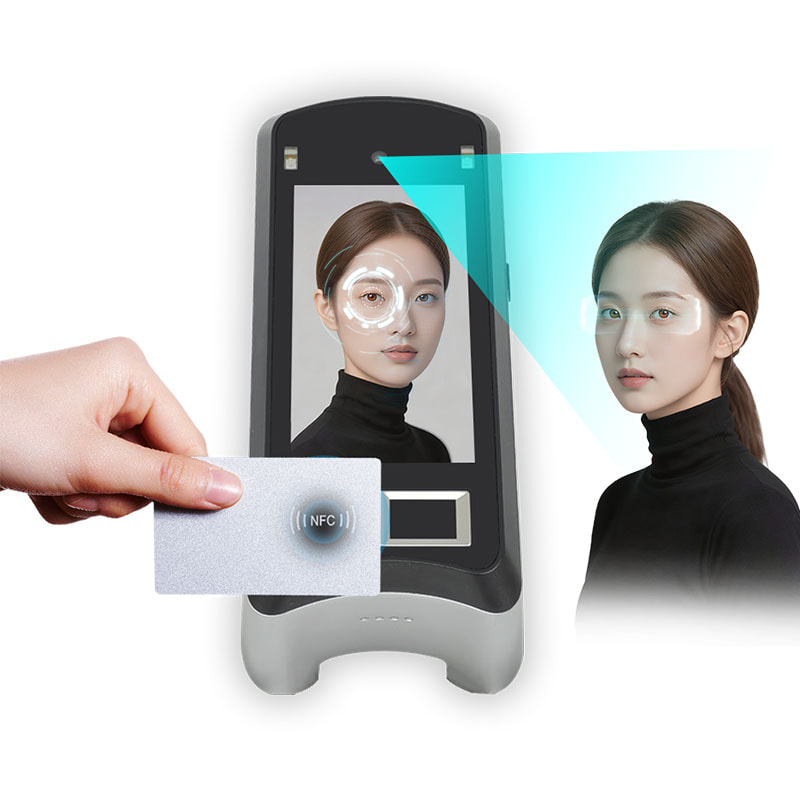
Iris scanning can be seamlessly combined with other authentication methods such as facial recognition, fingerprint scanning, NFC cards, or PIN codes. Multi-factor authentication increases security exponentially, making it ideal for high-risk areas.
Advantages of Iris Scanning for Access Control
Extremely Low False Acceptance Rate (FAR): Near-zero probability of unauthorized access.
Non-Intrusive and Hygienic: Users do not need to touch any device, minimizing contamination risk.
Rapid and Convenient: Authentication occurs in seconds, suitable for high-traffic locations.
Long-Term Stability: Iris patterns do not change significantly over a lifetime.
High Reliability in Various Conditions: Works well in bright or low-light environments.
Ideal for High-Security Facilities: Perfect for government buildings, data centers, airports, labs, and research facilities.
Iris Scanner Applications
Iris scanning has become a vital part of access control across multiple industries:
1. Corporate Offices
Protect sensitive areas such as server rooms, executive offices, and R&D labs. Iris scanning ensures that only authorized employees gain access.
2. Airports and Border Security
Iris recognition is increasingly used in immigration control and passenger verification. It accelerates boarding processes while maintaining high security.
3. Healthcare Facilities
Hospitals and medical labs use iris scanning to control access to restricted areas, secure medical records, and protect patients’ privacy.
4. Government Agencies
Secure access to classified information, secure facilities, and critical infrastructure relies on advanced iris recognition systems.
5. Educational Institutions
Universities and research labs employ iris scanning to safeguard laboratories, dormitories, and administrative areas from unauthorized access.
6. Financial Institutions
Banks and financial institutions use iris recognition to secure vaults, server rooms, and sensitive client data.
Potential Limitations of Iris Scanning
While iris scanning is highly secure, organizations should consider the following:
Higher Initial Costs: Compared to fingerprint or card systems, installation and device costs are higher.
User Cooperation Needed: Users must look directly at the scanner for accurate authentication.
Environmental Sensitivity: Extremely bright sunlight or reflective glare may affect accuracy if high-quality scanners are not used.
Maintenance: Periodic cleaning and calibration may be necessary for optimal performance.
Related products
Conclusion
Iris scanning is one of the most secure and reliable biometric solutions for access control. With unique iris patterns, advanced anti-spoofing technology, encrypted data storage, and fast authentication, it provides high accuracy and safety for various applications.
While initial costs may be higher, the long-term benefits—enhanced security, convenience, and stability—make iris scanning a smart choice for enterprises, government agencies, healthcare facilities, airports, and educational institutions seeking advanced access control solutions.
FAQ
Modern iris scanners use encryption and liveness detection, making hacking extremely difficult. Spoofing attempts with photos, videos, or artificial eyes are highly unlikely to succeed.
Yes. Iris scanning has a lower false acceptance rate (FAR) and is more resistant to physical spoofing compared to fingerprints, especially in high-security environments.
Authentication typically takes 1–2 seconds, providing quick and seamless access even in high-traffic areas.
Absolutely. It can integrate with multi-factor authentication systems, including facial recognition, fingerprint scanning, NFC cards, and PIN codes for enhanced security.
Iris scanning is widely adopted in airports, government facilities, corporate offices, healthcare centers, educational institutions, and financial organizations.
Yes, but devices must be high-quality and weatherproof to maintain accuracy under varying light and environmental conditions.
