


What is a POS Terminal?
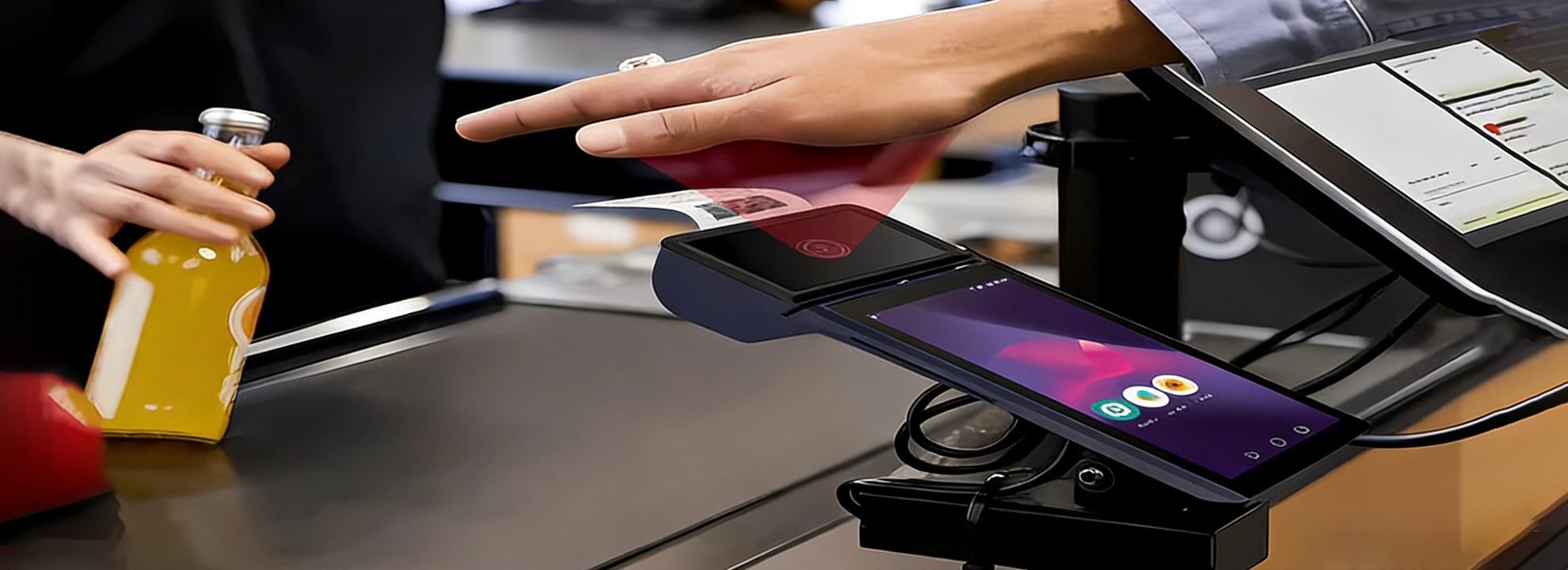
A POS terminal is a hardware device that allows businesses to process payments at the point of sale. Traditionally, POS terminals accepted credit and debit cards, but today’s devices support multiple payment methods, including:
Contactless payments (NFC)
Mobile wallets (Apple Pay, Google Pay)
QR code payments
Traditional chip & PIN or magnetic stripe cards
Beyond payment processing, modern POS terminals often integrate with inventory management, customer relationship management (CRM), and reporting software to provide a complete business solution.
How Does a POS Terminal Work?
Understanding how a POS terminal works is key to leveraging its full potential. The process typically includes the following steps:
1. Transaction Initiation
The cashier or POS system enters the total amount due. For integrated POS systems, the total is automatically calculated from inventory, product pricing, and sales data, ensuring accuracy in every transaction.
2. Payment Method Selection
Customers choose their preferred payment option—credit/debit card, mobile wallet, NFC tap, or QR code payment. Modern POS terminals support multiple payment methods, providing convenience and faster checkout for all customers.
3. Authentication & Authorization
The terminal communicates securely with the bank or payment processor. It encrypts sensitive payment information, verifies available funds or credit, and checks for potential fraud before approving the transaction to ensure safety.
4. Transaction Completion
Once approved, the payment is processed, and a receipt is generated—either printed or sent digitally. Simultaneously, the system updates inventory, records the sale, and logs customer data if integrated with CRM software for better management.
5. Reporting & Analytics
Advanced POS terminals automatically generate detailed sales reports, track stock levels, monitor peak hours, and provide insights into customer behavior, helping businesses make informed operational and marketing decisions.
By combining payment processing, security, and operational management, a POS terminal is no longer just a cash register—it’s a critical tool for modern business efficiency and customer satisfaction.
Types of POS Terminals
Businesses can choose from several types of POS terminals depending on their needs:
Countertop POS Terminals: Stationary devices for retail stores or restaurants; reliable and secure.
Mobile POS Terminals: Portable devices for on-the-go transactions; ideal for delivery, pop-up shops, or outdoor vendors.
Self-Service POS Terminals: Enable customers to complete transactions independently; commonly used in fast-food restaurants and supermarkets.
Cloud-Based POS Terminals: Connect to the cloud for remote management, analytics, and multi-location support.
Key Features of Modern POS Terminals
Modern POS terminals are much more than simple payment devices—they combine hardware, software, and connectivity to streamline business operations. Key features include:
Multi-Payment Support: Accept credit and debit cards, contactless NFC payments, QR code payments, and mobile wallets like Apple Pay and Google Pay. This flexibility ensures a faster, smoother checkout for all customers.
High Security: End-to-end encryption, PCI compliance, and advanced fraud detection protect sensitive customer data during every transaction, giving both businesses and customers confidence.
Inventory & Sales Management: Modern POS terminals automatically update inventory levels in real time with each sale, helping businesses avoid stockouts and manage product replenishment efficiently.
Reporting & Analytics: Generate detailed sales reports, track employee performance, monitor peak sales hours, and gain insights into customer behavior, all directly from the terminal or cloud-based dashboards.
User-Friendly Interface: Touchscreen displays, intuitive software, and easy navigation reduce employee training time and minimize errors during busy periods.
Integration Capabilities: POS terminals can connect to accounting, ERP, and CRM systems, allowing businesses to unify payment processing with overall operations and customer management.
These features make POS terminals essential tools for improving efficiency, security, and customer satisfaction in modern retail and hospitality environments.
Benefits of Using a POS Terminal
Investing in a modern POS terminal provides a wide range of benefits that go far beyond basic payment processing:
Faster Transactions:
By accepting multiple payment methods and automating calculations, POS terminals significantly reduce checkout times, leading to shorter queues and happier customers.
Enhanced Security:
Advanced encryption, PCI compliance, and real-time fraud detection protect both customers’ and businesses’ financial data, reducing the risk of losses from fraudulent transactions.
Accurate Sales Tracking:
POS terminals automatically record every sale, providing real-time data on revenue, product performance, and customer purchases, which improves business decision-making.
Inventory Management:
Stock levels are updated automatically, reducing human errors and helping businesses manage restocking efficiently, saving time and costs.
Business Insights & Analytics:
POS terminals provide detailed insights into sales trends, peak hours, and customer preferences, enabling businesses to optimize staffing, marketing, and promotions.
Improved Customer Experience:
Digital receipts, flexible payment options, and faster service enhance the shopping experience, encouraging repeat visits and brand loyalty.
By combining payment processing with operational management, POS terminals help businesses save time, reduce errors, and maximize revenue while providing a seamless experience for customers.
The Future of POS Terminals
The future of POS terminals is being shaped by technological advancements, evolving customer expectations, and the global shift toward cashless payments. Key trends include:
Mobile & Cloud POS Systems: Portable devices and cloud-based terminals allow businesses to manage sales, inventory, and analytics remotely while providing flexibility for mobile and pop-up operations.
Contactless & Biometric Payments: NFC, QR code, and biometric authentication (fingerprint or facial recognition) are becoming standard, offering faster, safer, and more convenient transactions.
AI-Driven Analytics: Artificial intelligence integrated with POS systems enables predictive analytics, personalized promotions, and inventory forecasting, helping businesses make smarter decisions.
Omnichannel Integration: Future POS terminals will seamlessly connect in-store, online, and mobile channels, providing a unified customer experience and centralized management of sales data.
Sustainability & Digital Receipts: Eco-friendly practices like paperless receipts and energy-efficient hardware are increasingly important, aligning with customer expectations and corporate responsibility goals.
By adopting modern POS terminals equipped with these innovations, businesses can stay competitive, increase operational efficiency, and enhance customer satisfaction in an ever-evolving retail landscape.
Conclusion
Understanding what a POS terminal is and how it works is essential for any business looking to improve payment efficiency, security, and customer satisfaction. Modern POS terminals not only process payments but also provide insights, reporting, and operational integration.
For high-quality, secure, and feature-rich POS terminals, HFSECURITY offers solutions tailored for retail, hospitality, and enterprise environments.
