Start with Your Project Scale and Application Requirements
Before selecting biometric devices, it is important to evaluate the overall project requirements. The number of users, access points, daily traffic volume, and management structure all affect the configuration of an access control system.
For example, a small office may only require a wall-mounted biometric attendance and access control terminal. In contrast, a large factory, commercial building, or industrial facility may need multiple access points, integrated turnstiles, centralized user management, and real-time access records.
For larger projects, scalability should also be considered. The system should support additional devices, user registration, and access points as operational requirements change.
Therefore, selecting a biometric access control solution should begin with an assessment of the entire project rather than focusing on a single device.
Choose the Right Biometric Technology for Identity Verification
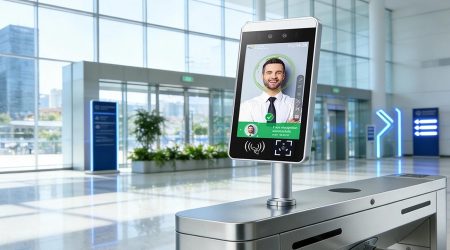
Face recognition is widely used in offices, factories, commercial buildings, and educational institutions. It enables contactless identity verification and supports convenient employee attendance and access management.
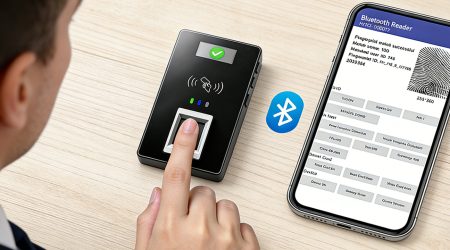
Fingerprint recognition is a practical option for employee attendance and access control applications. It offers a familiar verification method and can be integrated into various access control terminals.

Palm vein recognition uses the internal vein patterns of the hand for biometric identity verification. As a contactless recognition technology, it is suitable for applications requiring enhanced identity verification and convenient user interaction.
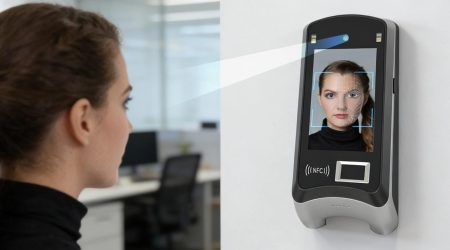
Iris recognition provides a highly distinctive biometric identification method. It is particularly relevant to high-security environments where accurate identity verification is a priority.
Multimodal Biometric Recognition
For projects requiring multiple verification options, multimodal biometric devices can combine technologies such as face, fingerprint, palm vein, iris, NFC cards, and QR codes.
This configuration allows system integrators to select different recognition methods according to project requirements, user groups, and security policies.
Consider the Access Channel and Traffic Management System
Biometric identification is only one part of an access control solution. In projects with physical entry and exit management requirements, the selection of turnstile equipment is equally important.
Different access channels serve different traffic patterns and installation environments.
Tripod Turnstiles: Suitable for offices, factories, and facilities requiring controlled pedestrian access.
Flap Barrier Turnstiles: Suitable for commercial buildings, metro stations, and locations requiring faster pedestrian movement.
Swing Barrier Turnstiles: Provide wider passage options for accessible entrances, luggage, and special access requirements.
Full-Height Turnstiles: Designed for outdoor or high-security environments where stronger physical access restrictions are required.
For an integrated biometric turnstile access control system, recognition terminals can be installed alongside or integrated with turnstile gates. When identity verification is successful, the access controller sends a signal to open the corresponding passage.
The system can also support different access permissions, entry and exit records, and centralized management through software.
Choosing the right combination of biometric devices and turnstile gates helps ensure that the access control system meets both security and traffic management requirements.
Evaluate Software Integration and System Compatibility
Hardware selection alone is not enough for a complete biometric access control project. Software capabilities and integration flexibility also determine how effectively the system operates.
Before making a decision, project planners should consider several important factors:
User Management: Does the system support centralized employee registration, user permissions, and device management?
Access Records: Can administrators view, export, and manage entry and exit records?
Attendance Management: Does the solution support employee attendance tracking and reporting?
Third-Party Integration: Are SDKs and APIs available for integration with existing HR, ERP, security, or management platforms?
Scalability: Can additional devices and access points be connected when the project expands?
For system integrators and engineering contractors, open integration capabilities are particularly important. Flexible SDK and API support can reduce development limitations and make it easier to adapt the solution to different project environments.
A suitable biometric access control system should provide both reliable hardware and practical software integration options.
Balance Security Requirements, Installation Conditions, and Budget
Project budgets are often an important factor in equipment selection. However, choosing the lowest-priced device does not necessarily result in the most cost-effective solution.
A more practical approach is to evaluate the total project requirements, including hardware, installation, software integration, maintenance, and future expansion.
For example, a small office may not need an advanced multimodal biometric system. A standard face recognition terminal with NFC card verification may be sufficient.
However, a large industrial facility or high-security site may require multiple biometric verification methods, integrated turnstiles, customized access permissions, and centralized management.
Installation conditions should also be considered. Indoor and outdoor environments, available installation space, pedestrian flow, network infrastructure, and power supply can all affect the final configuration.
The objective is to find a balance between security performance, operational efficiency, compatibility, and overall project cost.
Work with a Manufacturer That Supports Customized Access Control Solutions
Choosing the right manufacturer is just as important as selecting the right equipment. A reliable manufacturing partner can help ensure product quality, technical compatibility, and long-term project flexibility.
1. In-House R&D and Manufacturing Capabilities
A manufacturer with its own R&D team and production facilities can provide better control over product development, quality, and delivery. HFSecurity has in-house engineering, manufacturing, and quality control capabilities, supporting projects from product selection to solution implementation.
2. OEM/ODM and Hardware Customization
Different projects may require specific hardware configurations, appearance, installation methods, or biometric combinations. HFSecurity supports OEM/ODM services and hardware customization to help partners meet different project specifications.
3. Flexible Software and System Integration
Beyond hardware, integration flexibility is essential for project implementation. HFSecurity provides HFIMS management software, along with free SDK and API support, helping system integrators connect our devices with their existing platforms and develop project-specific applications.
Meet HFSecurity at BMIC 2026 in Thailand
Choosing the right biometric access control solution requires more than comparing device specifications. It involves understanding the project environment, selecting appropriate identity verification technologies, and ensuring that biometric hardware, turnstile equipment, and management software work together effectively.
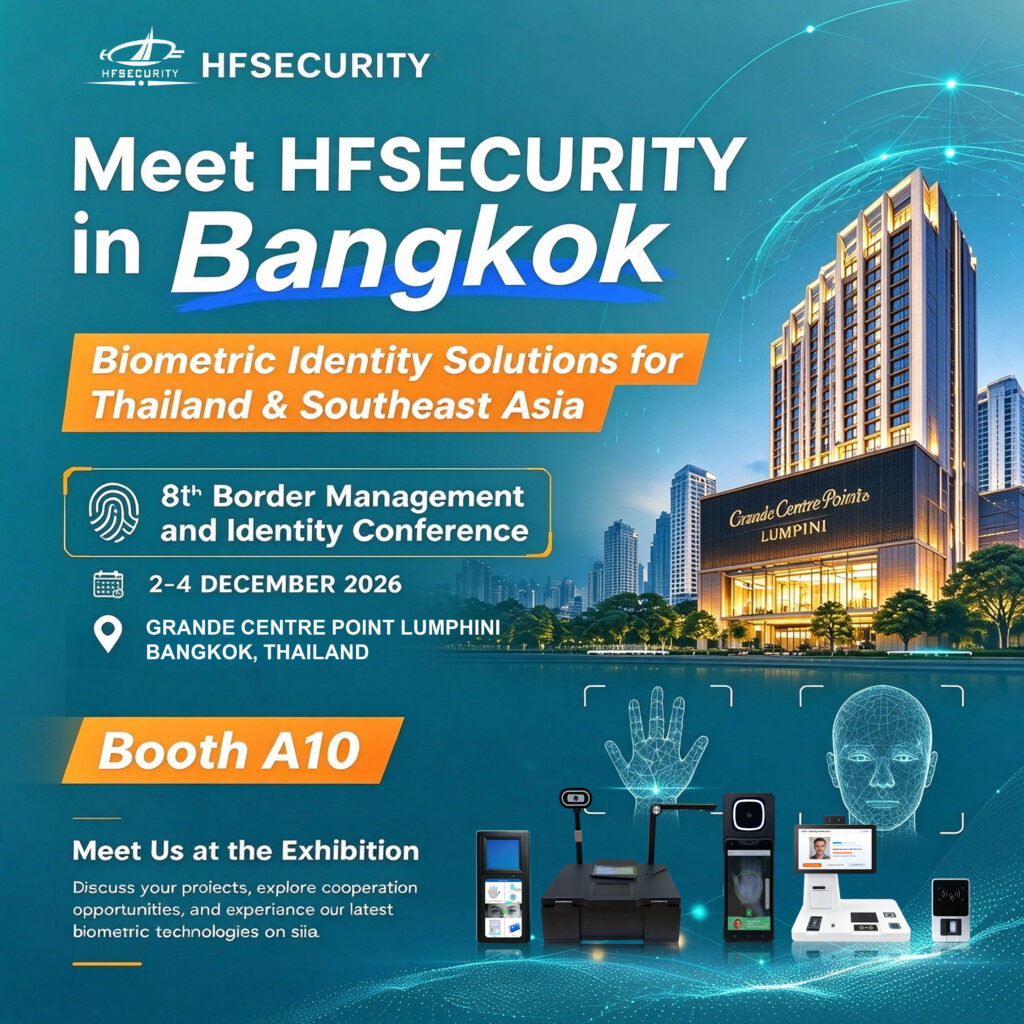
HFSecurity will participate in the 8th Border Management and Identity Conference (BMIC 2026) in Bangkok, Thailand, from December 2–4, 2026.
Visit us at Booth A10 to explore our biometric identity verification technologies, turnstile access control solutions, and customized integration capabilities.
We look forward to meeting system integrators, engineering contractors, project developers, and industry partners to discuss practical access control requirements and potential cooperation opportunities.